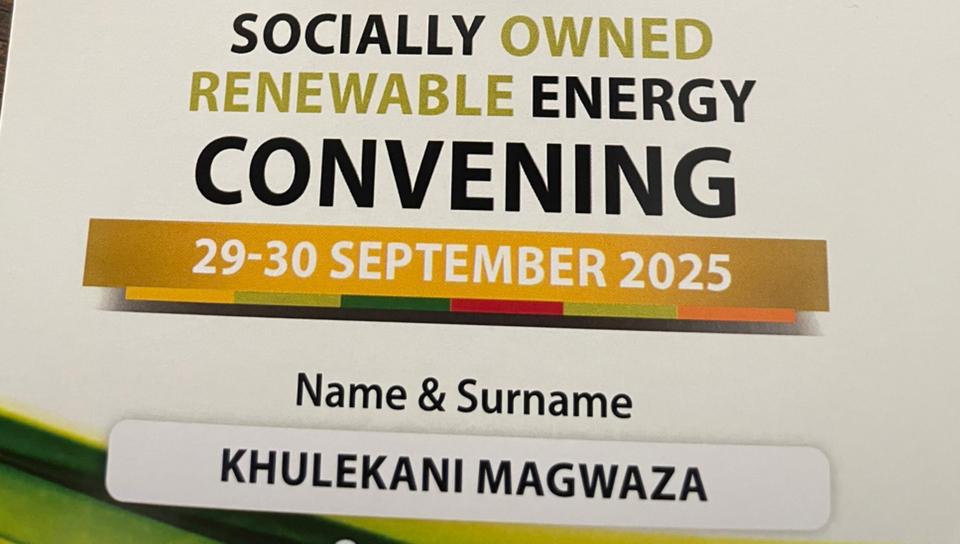

Over the past two days, I attended the Socially Owned Renewable Energy (SORE)Convening in Durban, hosted by groundWork and partners. SORE is a concept that is gaining momentum as South Africa searches for just and sustainable pathways out of coal dependence.
When we talk about renewable energy, we often celebrate megawatts and infrastructure. But this gathering asked deeper questions, among others: what does ownership mean? Is it just about who owns the solar panels or wind farms? Or is it about whether communities are trained, capacitated, and truly benefiting? And can decentralisation ensure not just access, but dignity and equity? I think the conclusion was clear: without redefining ownership, the energy transition risks replicating the same inequalities we see in coal and fossil systems.
Despite the growing momentum around socially owned renewables, several barriers remain: Finance is one of the biggest: around 90% of “just transition” funding in South Africa comes in the form of loans, which creates debt rather than empowerment. Communities need grants and supportive finance models, not additional burdens. Grids are another challenge, without community influence over transmission infrastructure, even the most promising local projects remain marginal. Finally, the issue of jobs and skills cannot be ignored: closing coal stations without reskilling workers risks leaving behind ghost towns instead of building new green opportunities.
But there were also inspiring stories:
The Sikhukhune community in Limpopo is combining off-grid and grid-tied projects to keep energy accessible and affordable.
In Soweto, women are leading climate and energy justice organising through the Electricity Crisis Committee.
And even in contested spaces like Komati’s repurposing, small businesses are finding footholds to shape the future.
The convening reminded me that reform is not enough. We don’t just need to tweak tariffs or add “social” labels to corporate projects. We need to transform the financial, legislative and governance systems that keep power concentrated in a few hands. Because in the end, socially owned renewables are about more than technology. They are about justice, participation, and democracy.
As we move forward, the challenge is clear: can South Africa and the world build an energy transition where power truly lies with the people? The answer is not only yes, but it is also both urgent and possible.